Every question on the Founding Team Readiness Checklist ultimately points back to this one. Market size, traction, use of funds, go-to-market strategy — investors evaluate all of these through a single underlying lens: is this team capable of executing on what they’re describing? The product can be compelling, the market can be enormous, and the financials can be well-reasoned, but if the investor doesn’t believe in the team, none of it matters.
This isn’t a soft, touchy-feely observation. It’s one of the most consistent behavioral patterns in early-stage investing. At the earliest stages, when the business is still largely a plan, investors are betting on the people at least as much as the plan — and often more. The Readiness Checklist’s team questions aren’t just about demonstrating competence. They’re about demonstrating the kind of self-awareness, commitment, and operational maturity that gives investors confidence that you’ll figure things out when things don’t go as planned.
Team Commitment: The First Honest Reckoning
Investment crowdfunding is not a quick fundraising shortcut. We tell founders this plainly in our onboarding conversations: it is a sustained effort over two to three months that converts your social capital — the trust and goodwill you’ve built with your network — into financial capital. That conversion process requires your team to be aligned, motivated, and available. If key team members aren’t on board, or if there’s ambiguity about who owns what, the campaign will expose those gaps at the worst possible moment.
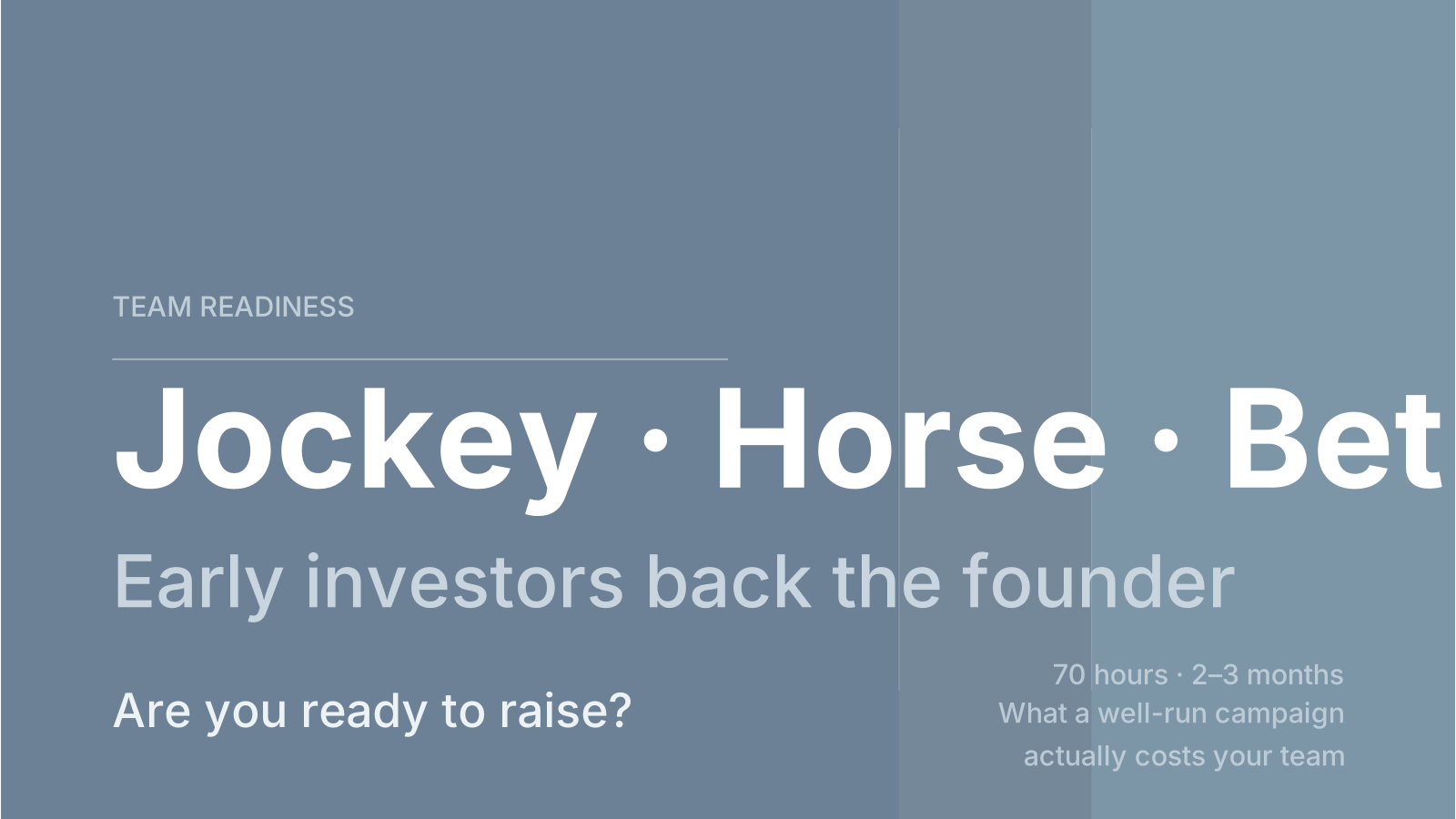
The commitment question has a practical dimension too. We estimate that a well-run crowdfunding campaign requires 70 or more hours of founder and team time spread across the preparation and campaign phases. That time goes into goal-setting and research, building investor lists, creating content, managing communications, and staying present for the momentum swings that every campaign experiences. A founder who goes in underestimating that workload — or without a team that has genuinely committed to sharing it — will struggle to maintain the energy the campaign needs.
The Readiness Questionnaire: A Structured Self-Check
We use a readiness questionnaire with founders that surfaces the practical questions investors are indirectly asking. The core items: Do you need to raise between $50,000 and $5 million? Are you offering a security — equity, debt, notes, revenue share? Do you have a clear path to revenue? Can you show the likely return on investment? Can you think of dozens of people who might invest? Where are your investors likely to be located — same state, multi-state, or national? Do you have a budget for professional services, including a securities attorney?
That last question is not optional. One of the clearest signals of team unreadiness is a founder who wants to launch a crowdfunding campaign without having engaged a securities attorney. The legal structure of an investment crowdfunding offering is not something you can figure out as you go — the filings, the exemption selection, the offering documents, and the ongoing disclosure obligations all require specialized expertise. We can guide you through the preparation process, but the legal work needs a qualified professional.
Investors Are Betting on the Jockey
The way we describe it to founders is this: the first money into a crowdfunding campaign is betting on the jockey, not the horse. The earliest investors — typically the people in your phone, your close network, your professional community — are not making a sophisticated financial analysis of your business. They’re deciding whether they believe in you: your judgment, your character, your commitment to seeing this through.
That means your team story isn’t just a slide in the pitch deck. It’s the subtext of every conversation, every founder update, every piece of content you produce during the campaign. Investors are reading between the lines constantly — watching how you respond to setbacks, how you communicate during quiet stretches of the campaign, how you treat people who ask hard questions. All of that is team-readiness data, and it shapes whether early believers become ambassadors or bystanders.
What “Why Is Your Team the Right One?” Actually Means
We add a sixth element to our High Five framework for this reason. After the five questions a pitch deck needs to answer — problem, competition, advantage, go-to-market, financials — there’s a sixth question that sophisticated investors always ask: why is your team the one to pull this off? This isn’t asking for resumes. It’s asking for the founder’s honest account of why their specific background, relationships, and capabilities give this business a higher probability of success than it would have in different hands.
The best answers to that question are specific and honest. They acknowledge gaps as well as strengths. They name the experiences, relationships, or domain knowledge that creates genuine founder-market fit. And they include a plan for the gaps — who you’re bringing in as advisors, what you’re hiring for, where you’re leaning on partners. A team that can articulate both what they bring and what they’re building around them is a team that inspires confidence.
Plan Your Raise. Raise Your Plan.
We close our team commitment conversations with a phrase that captures the entire readiness framework: plan your raise, raise your plan. The work of preparation — the research, the comparables, the milestone plan, the legal structure, the pitch materials — is not overhead. It is the investment. Founders who arrive at campaign launch having done that work raise faster, convert more of their network, and maintain momentum through the inevitable slow stretches that every campaign experiences.
The Readiness Checklist exists because we’ve seen what happens when founders skip steps. It’s not that skipping creates insurmountable problems — it’s that each skipped step becomes a gap that investors notice, a question you can’t answer confidently, or a delay that costs you momentum at the moment when momentum matters most. The founders who raise successfully are not always the ones with the best products or the biggest networks. They’re the ones who showed up prepared.
Your Action Step
Gather your founding team — co-founders, key early employees, critical advisors — and work through the readiness questionnaire together. Don’t answer the questions optimistically; answer them accurately. For any question where your honest answer is “not yet,” write down specifically what needs to happen before that answer can be “yes.” That list is your pre-campaign to-do list — and completing it is the most important thing you can do before you apply to launch.
Content reflects guidance developed through the Silicon Prairie Portal & Exchange team’s work with investment crowdfunding founders. Blog posts are for educational purposes only and do not constitute legal, financial, or securities advice. Always engage a qualified securities attorney before proceeding with a crowdfunding raise.