Somewhere along the way, the pitch deck became the symbol of startup ambition. Founders spend weeks perfecting it, emailing it to anyone who will look, posting it online, and treating it as the primary evidence that their business is serious. This approach is usually a mistake — not because pitch decks don’t matter, but because most founders misunderstand what a pitch deck is actually for.
The Readiness Checklist asks whether you have a pitch deck — but the more important question is whether you understand what it’s supposed to do. We find this to be one of the areas where our guidance differs most from the conventional wisdom founders absorb from startup media, so it’s worth spending some time here.
The Pitch Deck’s Only Job: Get a Second Meeting
When the Silicon Prairie team works through sales and business development with founders, we’re unambiguous on this point: the pitch deck’s purpose is to get a second meeting with a larger investor. That’s it. You are not trying to answer every question. You are not trying to close a deal. You are trying to leave the room with an investor thinking four things — that you’re credible and trustworthy, that the idea is interesting, that they understand the offer, and ideally that they like you and want to learn more.
This purpose-definition changes everything about how you build the deck. If the goal is a second meeting, every slide should be evaluated by one test: does this earn the next five minutes of attention, or does it answer a question the investor wasn’t yet asking? Most pitch decks fail because they try to do too much. A deck that explains your entire business, anticipates every objection, and includes three years of financial projections is a business plan with slides — not a pitch deck.
The High Five Framework: Five Questions in the Right Order
We use a framework internally that we call the “High Five” — five questions every pitch deck needs to answer, presented in a specific order. We believe strongly that the narrative order matters as much as the content, because investors process information sequentially and will disengage if you answer questions they aren’t ready to ask yet.
The five questions, in order:
- What problem do you think you’re solving?
- What are people doing right now — including doing nothing — to solve it?
- What unfair competitive advantage or unmet need have you discovered?
- What is your plan to get people to change their behavior to your way?
- When do you break even doing it?
Notice that the deck starts with the customer’s problem — not with your solution, not with your team, and not with your market size. Investors need to believe the problem is real before they can evaluate anything else. Once they believe the problem, they want to understand what currently exists (competition). Only after that are they ready to hear about your advantage, your go-to-market, and your financials.
Guy Kawasaki’s 10/20/30 Rule
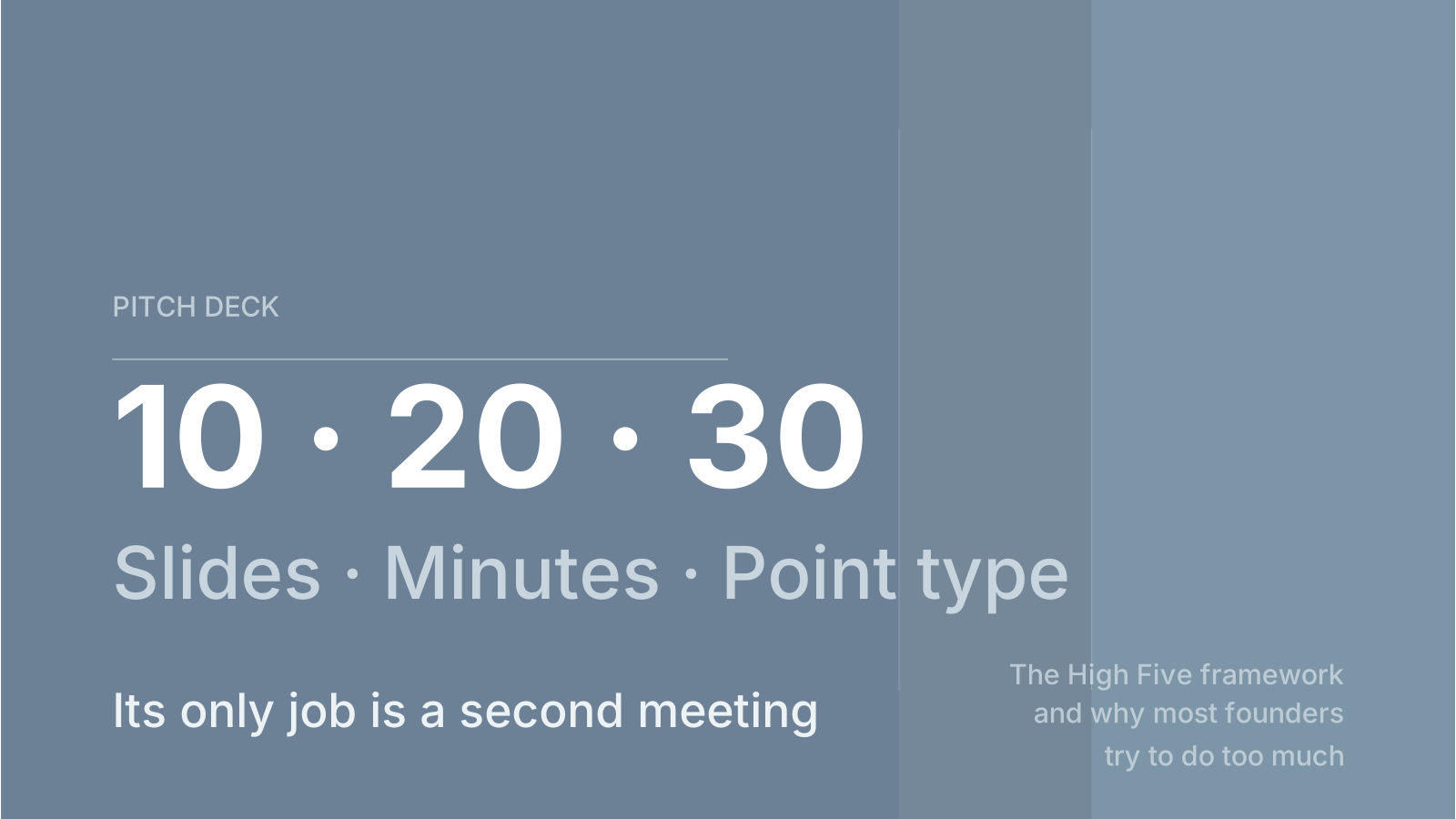
Members of our team have had the opportunity to see Guy Kawasaki present firsthand, and his framework for pitch decks is one we regularly share with founders. His rule is simple: ten slides, twenty minutes, thirty-point type. Ten slides because most human minds won’t absorb more than ten concepts in a single meeting. Twenty minutes because if you’re given an hour, you want forty minutes left for questions and conversation. Thirty-point type because large type forces you to use few enough words that the audience actually reads them.
The discipline behind the 10/20/30 rule is what matters most. It forces editing. It forces you to decide what’s essential and what’s background. It prevents the most common pitch deck failure mode — founders who love their own story too much to cut anything.
Design: Boring Kills Deals
We’ve worked with designers who support both founders and investors, and the feedback we hear most consistently from the investor side is this: pitch decks get visually boring quickly. When you’ve reviewed hundreds of decks in a year, the same layout, the same stock photo style, and the same color palette blur together.
Practical guidelines to start with: minimalist copy of one to five words per slide; varied text position and background color within a four-color palette so each slide feels distinct but cohesive; consistent, simple typeface family; full-slide photos tied to the message and tinted to reduce distraction; maximum ten slides; and brutal editing tested with people who don’t know your business and can tell you honestly what they don’t understand.
What a Pitch Deck Is Not
Two important clarifications: First, do not email your pitch deck to investors. A properly constructed pitch deck only makes sense when narrated by the presenter — it’s not a leave-behind document. If you want to send something in advance of a meeting, send a one-page executive summary. Your deck should feel incomplete without you in the room; that’s a feature, not a flaw.
Second, your pitch deck is not your business plan, and it’s not your offering documents. It’s a conversation-opening tool. The business plan, the financial projections, the offering memorandum — all of those come later, after you’ve earned the right to deeper engagement. The pitch deck gets you to the room. What happens in the room gets you to the paperwork.
Your Action Step
If you have an existing pitch deck, count the slides and time yourself presenting it. If you have more than ten slides or your presentation runs longer than twenty minutes, it needs editing. Start by applying the High Five test to each slide: which of the five questions does this slide answer? Any slide that doesn’t map cleanly to one of the five questions is a candidate for the cutting room floor.